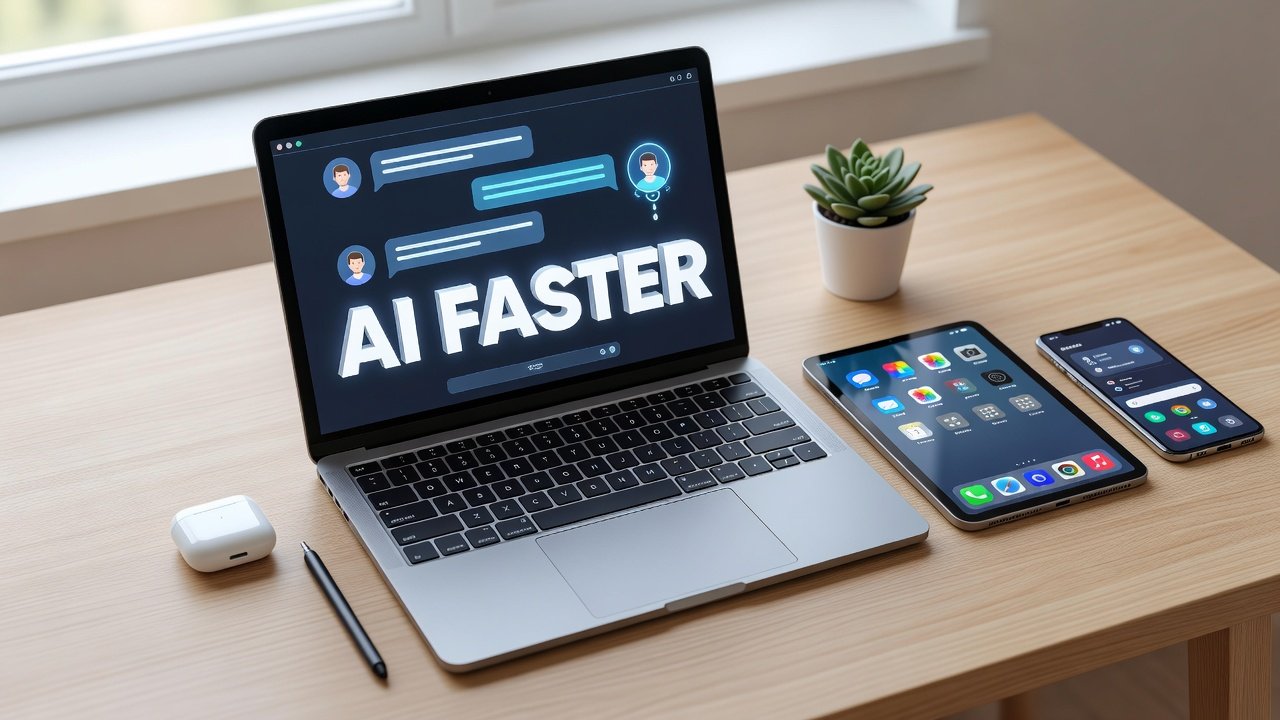
The speed at which AI assistants are accumulating users has left even seasoned tech observers surprised. While social media platforms once set the benchmark for rapid adoption, today's AI tools are rewriting the playbook entirely. ChatGPT, Google Gemini, and Claude didn't just attract early adopters - they pulled in mainstream users at a pace that outstripped apps we thought were unstoppable. What's driving this shift? The answer lies in a combination of convenience, adaptability, and a fundamental change in how people want to interact with technology. AI assistants aren't just faster to adopt because they're new and shiny. They're solving problems that traditional apps created, and they're doing it in ways that feel almost effortless.
The Speed Advantage That Traditional Apps Can't Match
Speed matters more than we often admit. When you need an answer, a draft, or a solution, every extra tap and swipe adds friction. Traditional apps require you to navigate menus, remember where features live, and often switch between multiple tools to complete a single task. AI assistants collapse that entire process into a conversation. You ask, they respond, and you move forward.
The numbers tell the story clearly. According to recent data, 83% of AI users report that AI assistants complete tasks more quickly than traditional apps. That's not a marginal improvement - it's a fundamental shift in efficiency. When you can describe what you need in plain language instead of hunting through interface layers, the time saved compounds across dozens of daily interactions.
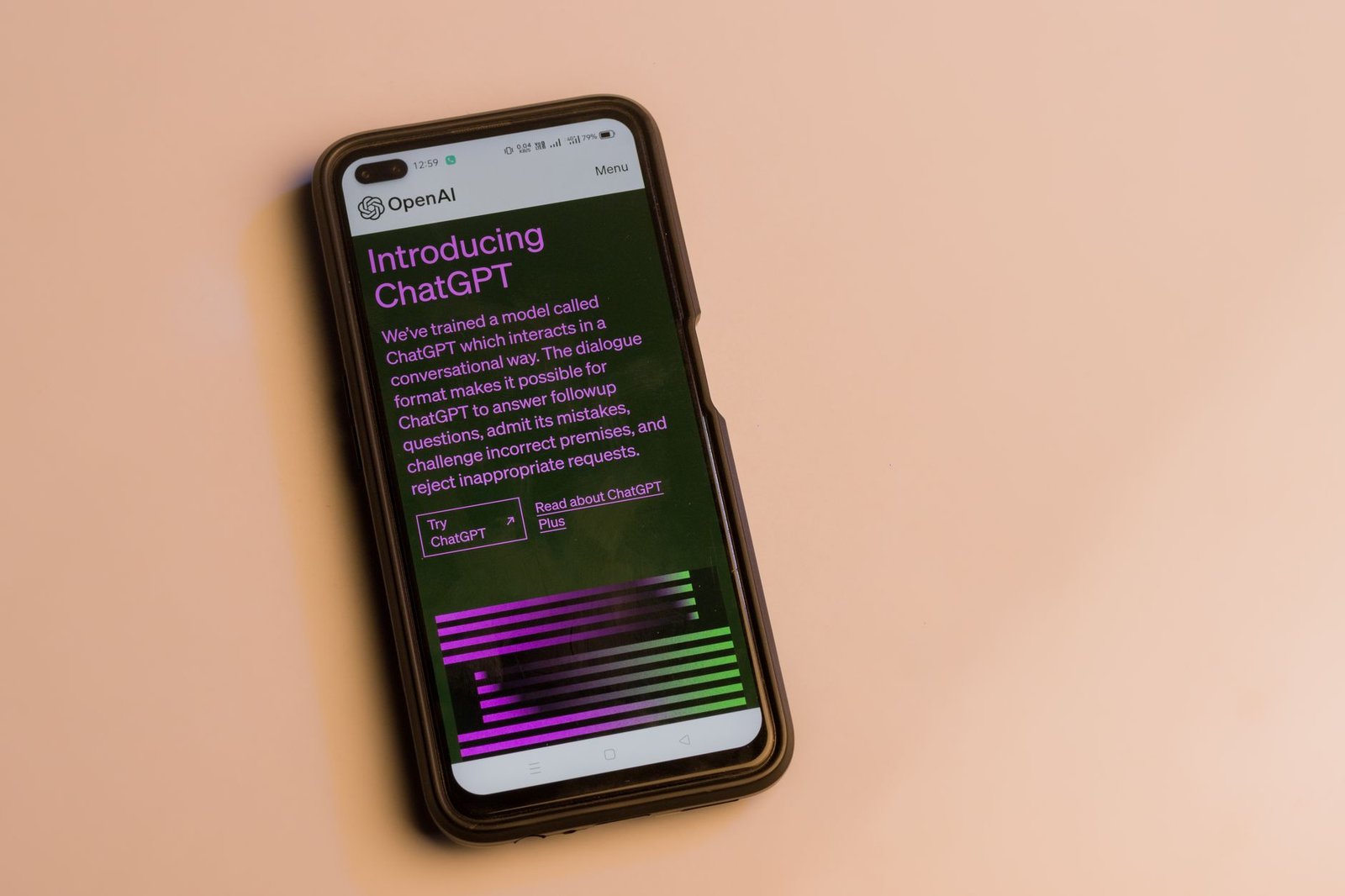
AI Snapshot: Nearly one-third of consumers have already substituted at least one application with an AI assistant in the past year, and 36% anticipate relying more on AI assistants than apps for the majority of their everyday tasks in the coming year.
This speed advantage extends beyond simple queries. Planning a trip used to mean opening a dozen browser tabs, checking multiple apps, cross-referencing information, and piecing it all together yourself. Now you can describe your constraints and preferences, and an AI assistant synthesizes options in seconds. Drafting an email that strikes the right tone? Instead of staring at a blank screen, you can collaborate with an assistant that suggests phrasing and structure. The cognitive load drops dramatically.
Traditional apps trained us to adapt to their logic. AI assistants flip that relationship. They adapt to us, meeting us where our thinking already lives - in natural language, in questions, in half-formed ideas that need refining. That inversion is why adoption curves look so different this time around.
Learning Curves That Flatten Themselves
Every new app comes with a learning curve. You download it, poke around, maybe watch a tutorial, and gradually figure out its quirks. Some people enjoy that discovery process. Most just want to get their work done. AI assistants largely eliminate that barrier because the interface is conversation itself - something humans have been practicing since childhood.
You don't need to memorize keyboard shortcuts or understand a developer's mental model. If you can describe what you want, you can use the tool. That accessibility matters enormously when you're trying to reach beyond early adopters. A retiree managing travel plans, a student organizing research, a small business owner drafting social media posts - they all start from the same simple entry point: just ask.
The personalization layer deepens this advantage. AI assistants adapt to your preferences over time, learning which formats you prefer, which level of detail you need, and which contexts require more explanation. Traditional apps offer customization, but you have to configure it. AI assistants build that understanding through use, making the tool more useful the longer you interact with it.
This self-flattening learning curve means that distribution happens differently. You don't need extensive onboarding flows or feature tours. People try an assistant once, get a useful result, and return when they hit the next problem. Word spreads through showing, not explaining - someone sees a colleague draft a document in minutes instead of hours, and suddenly there's another user.
The Replacement Effect Is Already Here
We're past the experimentation phase. People aren't just trying AI assistants alongside their existing apps - they're actively replacing tools they've used for years. The shift is happening faster than most forecasts predicted, and it's driven by concrete results, not hype.
Consider what this looks like in practice. Someone who previously used a dedicated recipe app might now ask an AI assistant to generate meal ideas based on what's in their fridge. A freelancer who relied on separate tools for invoicing templates, contract drafting, and client communication might consolidate several of those workflows into conversations with Claude or ChatGPT. A marketer who bounced between analytics dashboards and content calendars might now get summaries and suggestions in a single thread.
The pricing landscape reflects this consolidation opportunity. ChatGPT offers tiers from free up to Pro plans at $100, $200, and $500 per month, with Go at $8 monthly and Plus at $20. Google Gemini's Pro tier sits at $19.99 monthly, while Plus starts at $4.99, and Ultra now costs $99.99 monthly after a recent reduction, with a higher-limit plan at $199.99. Claude Pro matches ChatGPT Plus at $20 monthly, with Max tiers at $100 and $200, plus team options at $100 per seat. For many users, a single AI subscription replaces multiple specialized app subscriptions, simplifying both workflows and budgets.
That consolidation creates momentum. Every app replaced strengthens the habit of turning to the assistant first. The more tasks you successfully hand off, the more natural it becomes to try the next one. This feedback loop accelerates adoption in ways that traditional apps - each serving a distinct function - couldn't replicate.
What AI Assistants Still Get Wrong
Honesty requires acknowledging the gaps. AI assistants aren't magic, and they're not ready to replace human judgment across the board. They struggle with ambiguity, lose context in long conversations, and produce outputs that often need careful review. Accuracy remains inconsistent. Memory across sessions is imperfect. Autonomy is limited - these tools still require direction, not just activation.
The empathy problem is real and consequential. AI assistants don't understand emotional nuance or read between the lines the way humans do. They miss nonverbal cues entirely because those cues don't exist in text. Complex client communications, crisis management, negotiations that hinge on tone - these remain firmly in human territory. An assistant can draft a message, but it can't tell you whether now is the right moment to send it or what the subtext of a terse reply really means.
Verification is non-negotiable. Because these systems generate plausible-sounding text regardless of underlying accuracy, you can't afford to trust blindly. That means AI assistants work best for tasks where you can quickly check the output or where perfect precision isn't critical. Legal documents, medical advice, financial decisions - these demand expertise and accountability that assistants can't provide.
Clear prompts matter more than most new users realize. Vague requests produce vague results. Learning to be specific, to provide context, to iterate on initial outputs - these are soft skills that users develop over time. The learning curve may be flatter than traditional apps, but it's not absent. Effectiveness scales with practice.
Conclusion
The adoption curve for AI assistants looks different because the value proposition is fundamentally different. These tools don't ask users to learn a new interface or adapt to someone else's workflow. They meet people in natural language, adapt over time, and collapse multi-step processes into conversations. Speed, convenience, and personalization aren't just nice features - they're the core reasons why people keep coming back.
We're watching a genuine shift in how people approach everyday tasks. Traditional apps aren't disappearing, but they're increasingly reserved for specialized functions where dedicated interfaces add real value. For the growing middle ground of daily work - research, writing, planning, organizing - AI assistants are becoming the first stop, not the fallback. That's reflected in usage patterns, in subscription trends, and in the quiet ways people are reorganizing their digital toolkits.
The limitations are real and worth understanding. These assistants require oversight, clear direction, and healthy skepticism about their outputs. But within those boundaries, they're delivering something users clearly want: tools that work the way people think, not the other way around. That's a powerful foundation for continued growth, and it explains why adoption numbers are outpacing everything that came before.
FAQs
Are AI assistants actually replacing traditional apps or just being used alongside them?
Both patterns exist, but replacement is accelerating. Research shows that nearly one-third of consumers have already swapped at least one traditional app for an AI assistant in the past year. Users often start by using assistants alongside existing tools, then gradually consolidate workflows as they discover which tasks the assistant handles well. The replacement effect is strongest for tasks involving writing, research, planning, and information synthesis - areas where conversational interfaces offer clear advantages over traditional app navigation.
Why do AI assistants have faster adoption rates than social media platforms did?
AI assistants solve immediate, practical problems rather than requiring network effects to become useful. You can get value from ChatGPT or Claude on your first interaction, without needing friends or colleagues to join first. The learning curve is also dramatically lower - if you can type a question, you can use the tool. Social platforms required users to build profiles, find connections, and learn platform-specific norms before seeing real benefits. AI assistants deliver utility from day one, which compresses the adoption timeline significantly.
What types of tasks should I not trust to an AI assistant?
Avoid delegating tasks that require perfect accuracy, deep emotional intelligence, or high-stakes decision-making. Legal documents, medical advice, financial analysis, and crisis communications all need human expertise and accountability that AI can't provide. Tasks involving complex client relationships, nuanced negotiations, or reading emotional subtext will consistently fall short when handled by assistants alone. Use AI for drafting, research, and ideation, but keep final review and judgment in human hands for anything consequential.
How do I choose between ChatGPT, Claude, and Google Gemini?
Each assistant has strengths worth considering. ChatGPT offers the broadest feature set and most pricing tiers, from free to $500 monthly for Pro plans, with Go at $8 and Plus at $20. Claude excels at long document analysis and coding tasks, with Pro at $20 monthly and team options available. Google Gemini integrates tightly with Google Workspace and offers competitive pricing starting at $4.99 monthly for Plus, with Pro at $19.99 and Ultra at $99.99. Try the free tiers of each for your specific use cases - the best choice depends on what workflows you're trying to improve and which ecosystem you already rely on.
Author

Maya-Rodriges@foucheres.com
Related Posts

Voice AI Is Finally Good: Where It Actually Works
Voice AI has crossed the accuracy threshold. Discover where voice AI actually works now - from customer service to healthcare - and...
Read out all
OpenAI Agents API: Build AI Agents With Sessions
OpenAI's Agents API launched Sept 2026 with managed sessions, automatic context compaction, and flexible deployment for building long-running AI agents.
Read out all
Is AI Search Replacing Google? What the Numbers Say
Is AI search replacing Google? We analyze market share, usage patterns, and 2026 data to reveal what's really happening in the search...
Read out all
Slack Integrates AI Coding Agents Into Group Chat
Slack Code brings AI coding agents into team channels for collaborative development. Learn how this August 2026 launch changes software teamwork.
Read out all
Alibaba Qwen 3.8 27B: Vision, 262K Context, Apache 2.0
Alibaba's Qwen 3.8 27B delivers multimodal AI with vision processing, 262K token context, and Apache 2.0 licensing. Runs on consumer GPUs with...
Read out all
This Week in AI: Major Model Releases and What They Mean
Google Gemini 3.5 Flash, GPT-5, and Claude 4.5 Sonnet redefine AI in 2026. Explore autonomous agents, multimodal capabilities, and what these releases...
Read out all