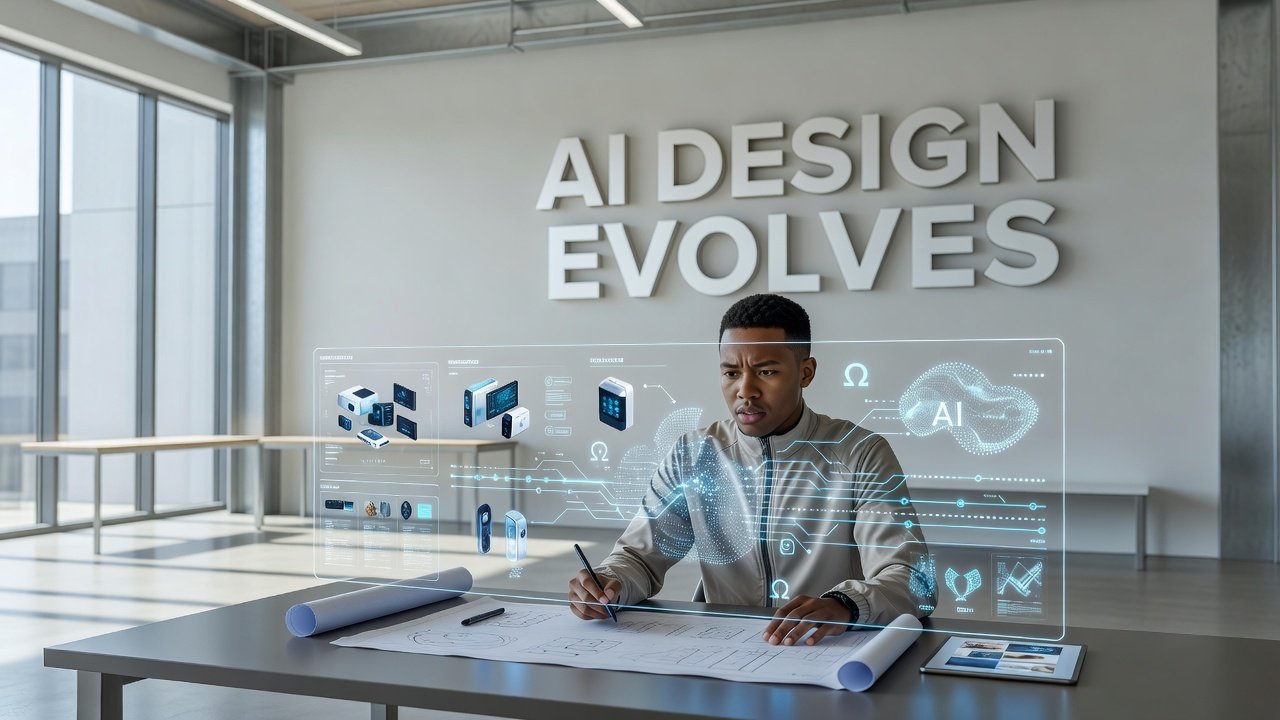
AI design tools have moved past the novelty phase. What started as experimental image generators has evolved into production-grade systems that designers use every day. The real question now isn't whether AI will change how we design, but how quickly those changes will reshape entire workflows. Over the next few years, we're looking at a shift from AI as an assistant to AI as a collaborator that can handle complete design systems, participate in real-time critiques, and potentially reshape intellectual property law. Understanding where this technology is heading helps designers prepare for a landscape where creative control and technical capability intersect in entirely new ways.
Autonomous Workflows and End-to-End Design Systems
The most significant shift coming is AI's ability to handle entire feature flows without constant human intervention. Right now, most designers use AI for specific tasks - generating hero images, creating variations of a component, or prototyping layout ideas. That's about to change dramatically. AI agents are evolving to manage complete design workflows from initial concept through final assets, requiring designers primarily for strategic review rather than execution.
This doesn't mean designers become obsolete. It means the role shifts toward creative direction and quality control. Instead of spending hours adjusting padding, choosing color values, or creating responsive breakpoints, you'll brief an AI system on requirements and review its output. The designer's value moves upstream - defining brand guidelines, establishing design principles, and making judgment calls about user experience that require cultural context and emotional intelligence.
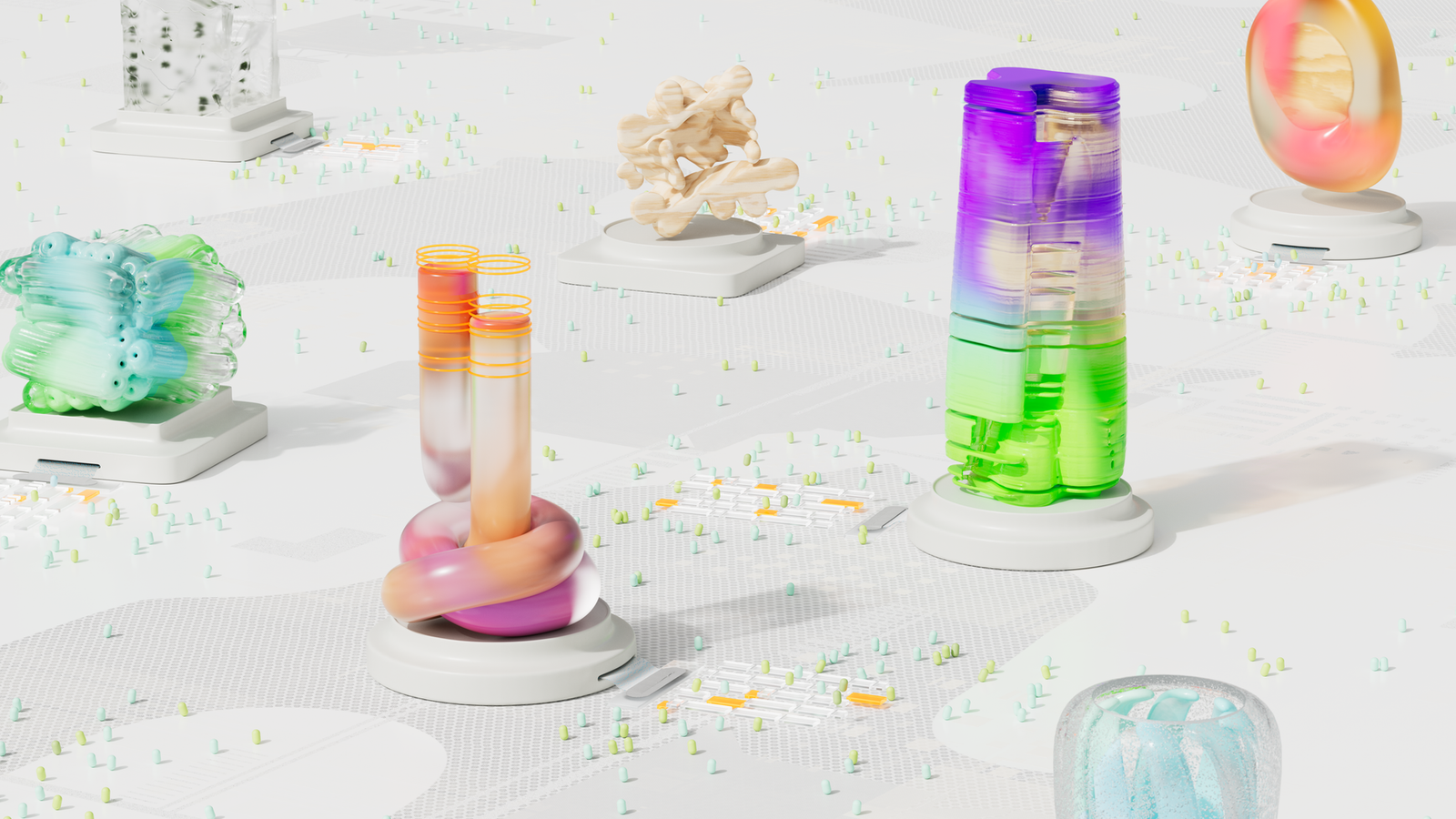
AI Snapshot: By 2028, AI agents are expected to handle entire feature flows from beginning to end, with designers primarily needed for strategic review rather than execution.
What makes this possible is the integration of multiple AI tools working together. Rather than one system trying to do everything, we're seeing specialized AI tools combine their strengths. One handles visual design, another manages interaction patterns, a third optimizes for accessibility. The designer orchestrates these systems rather than manually executing each step. According to emerging generative AI trends, this multi-tool integration represents one of the most significant efficiency gains coming to design workflows.
Real-Time Collaborative AI in Design Critiques
Here's where things get interesting. Current AI design tools operate asynchronously - you prompt them, they generate assets, you review later. The next evolution brings AI directly into live collaboration. Imagine running a design critique where an AI participant analyzes the work in real-time, flags accessibility issues as they're discussed, suggests alternatives based on your brand system, and references similar patterns from your component library.
This real-time participation changes the dynamic of design reviews. Instead of AI generating options beforehand that might miss context from the discussion, it responds to the actual conversation. When someone raises a concern about mobile usability, the AI can instantly prototype variations addressing that specific issue. When the team debates color contrast, it calculates WCAG compliance on the spot and generates compliant alternatives.
The technology enabling this exists now, but the integration into design tools is still maturing. We're likely to see this capability become standard in major design platforms within the next two years. It requires substantial computational resources - running multiple AI models simultaneously while maintaining responsive performance - but cloud infrastructure is catching up to those demands.
The challenge isn't technical capability. It's figuring out when AI input helps versus when it creates noise. Not every design discussion benefits from algorithmic suggestions. Part of the evolution will be teaching these systems when to contribute and when to stay quiet, learning from team dynamics and project context rather than just analyzing visual elements.
Regulatory Evolution and Intellectual Property Questions
The legal framework around AI-generated design is still forming, and the next few years will likely bring significant clarity. Right now, copyright ownership of AI-generated work exists in a gray area. If an AI system creates a logo based on your prompts, who owns that design? What happens when multiple people prompt similar concepts? How do you prove originality when the AI trained on millions of existing designs?
Regulations are expected to evolve with clearer standards for AI-generated design and intellectual property ownership. This isn't just theoretical - it affects real business decisions. Companies need to know they can trademark an AI-generated brand identity. Designers need certainty that their AI-assisted work won't face copyright challenges. Clients want assurance they're getting legally protectable assets.
We're likely to see tiered ownership frameworks emerge. Work where AI provides minor assistance (like adjusting colors or scaling elements) will probably remain clearly owned by the human designer. Fully autonomous AI creation might fall into a different category, possibly requiring new types of attribution or licensing. The middle ground - collaborative human-AI work - presents the trickiest questions.
Industry organizations and regulatory bodies are actively working on these standards. Expect proposals and draft frameworks to appear in late 2026 and 2027, with more concrete regulations following by 2028. Designers working with AI now should document their creative process carefully, showing how AI fits into their workflow rather than replacing it entirely. That documentation might become legally relevant sooner than you think.
The Pricing and Platform Landscape
The business models around AI design tools are still finding equilibrium. Midjourney currently offers four subscription tiers - Basic at $10 monthly, Standard at $30, Pro at $60, and Mega at $120, with 20 percent off for annual payment. These plans provide GPU time blocks rather than fixed image counts, and unused time doesn't roll over. That model reflects the computational reality but creates planning challenges for designers who need predictable costs.
The platform landscape shifted significantly when DALL-E 3 was retired on May 12, 2026, replaced by GPT Image 2 in ChatGPT and the API. DALL-E 3 had persistent limitations - it struggled with legible text rendering and offered fixed output resolutions that required additional tools for print work. Its retirement signals how quickly this space evolves. Tools that seem dominant can become obsolete within a single product cycle.
Stable Diffusion represents a different approach entirely. Rather than a single subscription, costs depend on how you access it. Self-hosting requires your own hardware and compute expenses. The Stability AI Community License permits free commercial use for organizations under one million dollars in annual revenue. Beyond that threshold, you need an Enterprise license with custom pricing. API access to Stable Diffusion 3.5 ranges from $0.025 to $0.065 per image depending on the tier.
Midjourney's lack of an API creates interesting constraints - it can't connect to other software, websites, or automated workflows. That limitation might seem minor now but becomes significant as design systems grow more integrated. The platforms that survive long-term will likely be those offering both standalone tools and integration capabilities, letting designers incorporate AI into existing workflows rather than working in isolated environments.
Conclusion
The trajectory of AI design over the next few years points toward deeper integration rather than replacement. Designers won't disappear - their role will evolve to emphasize strategic thinking, creative direction, and the human judgment that AI can't replicate. The tools will become more capable, handling complete workflows and participating in real-time collaboration. Legal frameworks will mature, bringing clarity to ownership questions that currently create uncertainty.
What we're witnessing is the early stage of a fundamental shift in creative production. The designers who thrive will be those who view AI as a powerful capability to direct rather than a threat to avoid. They'll understand which tasks benefit from automation and which require human insight. They'll stay informed about regulatory changes affecting their work. Most importantly, they'll maintain the creative vision that turns computational capability into meaningful design. The technology enables more than ever before, but human judgment still determines what's worth creating.
FAQs
Will AI design tools completely replace human designers?
No, AI tools are moving toward handling execution and technical tasks while designers focus on strategy, creative direction, and decisions requiring cultural context and emotional intelligence. The role shifts from manual execution to orchestrating AI systems and ensuring quality aligns with brand and user needs. Human judgment about what makes good design remains essential, even as AI handles more production work.
Who owns the copyright to AI-generated designs?
Copyright ownership for AI-generated work currently exists in legal gray areas, but regulations are expected to evolve over the next few years with clearer standards. Ownership will likely depend on the level of human involvement - minor AI assistance probably stays with the human designer, while fully autonomous creation may require new licensing approaches. Document your creative process carefully to show how AI fits into your workflow rather than replacing it.
Can I use Midjourney in automated workflows or connect it to other tools?
No, Midjourney has no API and cannot be connected to other software, websites, or automated workflows. This limitation affects designers building integrated design systems or automated production pipelines. If integration capability matters for your workflow, you'll need to consider platforms that offer API access, like Stable Diffusion, which provides API access ranging from $0.025 to $0.065 per image depending on the tier.
How will AI participate in design critiques in real-time?
AI is evolving to join live design discussions rather than just generating assets beforehand. In real-time critiques, AI will analyze work as it's discussed, flag accessibility issues, suggest alternatives based on brand systems, and prototype variations addressing specific concerns raised during the conversation. This requires running multiple AI models simultaneously with responsive performance, a capability expected to become standard in major design platforms within the next two years.
Author

Maya-Rodriges@foucheres.com
Related Posts
Beyond Chatbots: What's Next for Artificial Intelligence
Discover what's coming after chatbots: agentic AI, multimodal systems, scientific breakthroughs, and invisible artificial intelligence woven into daily life.
Read out all