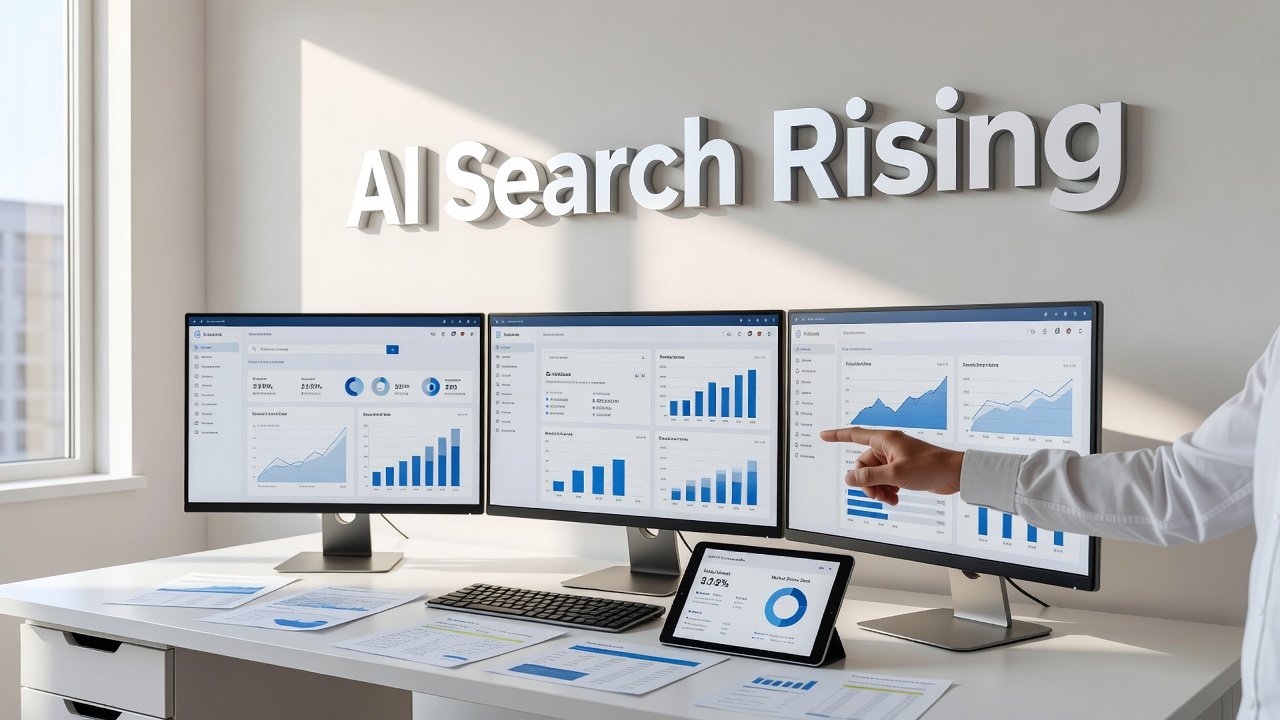
The search landscape is shifting faster than most of us realize. For decades, Google has been synonymous with search itself - "just Google it" became part of everyday language. But 2026 is witnessing a genuine disruption. AI-powered search tools like ChatGPT, Perplexity, and Google's own AI Overviews are changing how millions find information online. The question isn't whether AI search exists - it's whether it's actually eating into Google's dominance. Let's look at what the numbers reveal about this transformation and what it means for how we'll search tomorrow.
The Market Share Reality Check
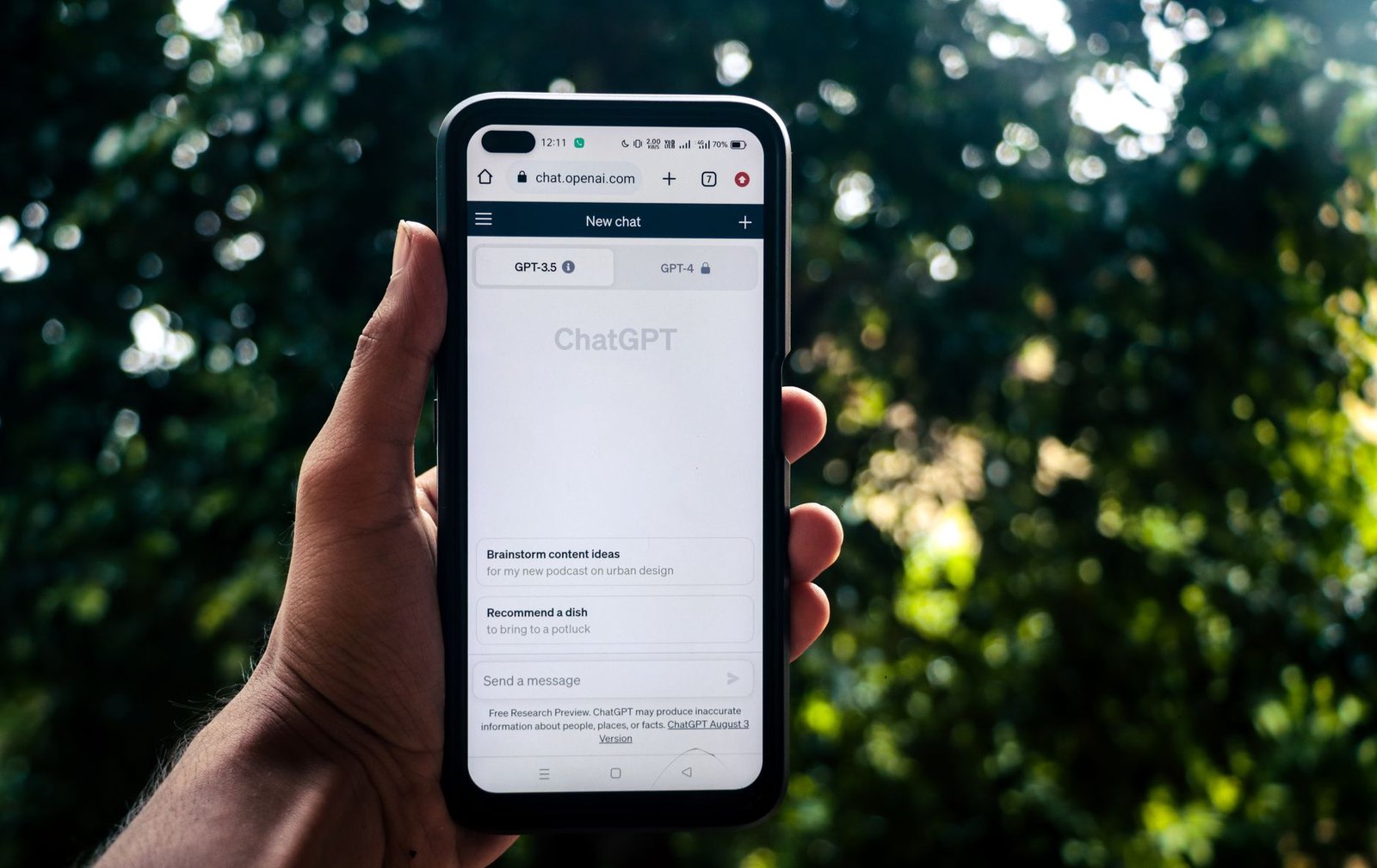
Google still commands the search engine throne, but the walls are showing cracks. As of early 2026, Google holds roughly 90% of the global search market share. That sounds unassailable until you examine the trajectory. ChatGPT alone processes hundreds of millions of queries daily, and while OpenAI doesn't release precise search volume figures, third-party estimates suggest the platform handles over 10 million daily searches through its dedicated search feature launched in late 2024.
Perplexity AI, another major player in conversational search, reported crossing 100 million weekly queries in late 2025. These aren't replacing Google searches one-for-one yet, but they represent net new search behaviors - people asking questions they wouldn't have typed into a traditional search box. The shift is particularly pronounced among younger users and professionals seeking quick, synthesized answers rather than link collections.
What matters more than raw numbers is the intent shift. Google's own data shows that searches with question formats have grown 35% since 2024. Users want answers, not just links. Google knows this - that's precisely why they rushed AI Overviews into production, even after early missteps that generated headlines for suggesting people eat rocks or put glue on pizza.
AI Snapshot: ChatGPT's search feature processes over 10 million daily queries, while Perplexity AI crossed 100 million weekly searches in late 2025, representing a significant new category of search behavior.
Where AI Search Actually Wins
AI search tools excel in specific scenarios where traditional search falls short. Complex research questions that would normally require opening ten tabs and synthesizing information yourself? AI search handles that in seconds. Need to compare technical specifications across products while understanding trade-offs? A conversational AI can walk you through it like a knowledgeable friend.
Professional users have become early adopters for good reason. Developers use ChatGPT to find code solutions with context. Researchers use Perplexity to quickly scan academic concepts across multiple sources. Writers use AI search to fact-check and find supporting evidence without drowning in SEO spam. The value proposition isn't just speed - it's comprehension.
Traditional Google search returns links ranked by authority and relevance signals. You still need to click, read, evaluate credibility, and synthesize. AI search attempts to do that synthesis for you, citing sources as it goes. When it works well, it collapses a 15-minute research task into a 2-minute conversation. When it hallucinates or misinterprets sources, it can confidently deliver misinformation faster than you'd find it yourself.
That reliability gap is the main reason AI search hasn't replaced Google for most people yet. We trust Google's blue links because we can see the source before we click. We can assess whether WebMD or a random forum post deserves our attention. AI search asks us to trust its interpretation - a harder sell when accuracy isn't guaranteed.
Google's Response and the Hybrid Future
Google isn't sitting still while upstarts chip away at search queries. The company has integrated AI directly into search results through AI Overviews, which now appear for roughly 20% of queries in the United States. These generated summaries attempt to answer questions directly while still showing traditional links below - a hybrid approach hedging between old and new.
The strategy makes business sense. Google's revenue model depends on ads tied to search results. Pure AI answers could cannibalize that revenue stream. AI Overviews let Google compete with ChatGPT's convenience while keeping users inside the advertising ecosystem. Early data suggests the approach is working - users click AI Overviews at higher rates than featured snippets, and they still scroll down to ads and organic results.
Meanwhile, Google's Gemini AI powers a standalone conversational search experience that competes directly with ChatGPT. The company is essentially competing with itself - traditional search in one column, AI search in another - to ensure it captures users regardless of which approach wins long term.
Other traditional search engines are making similar moves. Microsoft's Bing integrated GPT-4 capabilities early, gaining its first meaningful market share growth in years. The AI integration didn't dethrone Google, but it stopped Bing's slow decline and attracted users who wanted conversational search without leaving the familiar search engine interface.
What the Usage Patterns Tell Us
The data reveals something more nuanced than simple replacement. People aren't abandoning Google for AI search - they're using both, for different purposes. A 2025 survey of 2,000 internet users found that 68% still use Google as their primary search tool, but 43% also use ChatGPT or similar AI tools for specific research tasks. The overlap is substantial.
User behavior breaks down along task lines. Quick factual lookups? Still Google. "What time does the store close?" "Weather tomorrow?" These simple queries don't benefit much from AI elaboration. But complex questions requiring synthesis, comparison, or explanation? AI search is gaining ground fast.
Age demographics matter too. Users under 30 show significantly higher adoption of AI search tools, using them for everything from homework help to travel planning. They're less attached to the Google habit and more comfortable with conversational interfaces shaped by years of smartphone assistants and chat apps. Users over 50 stick with traditional search at much higher rates, citing trust and familiarity.
The mobile versus desktop split also influences adoption. AI search on mobile feels more natural - it mimics texting a smart friend. Traditional search on desktop still offers advantages when you need to open multiple sources, compare visually, or work across tabs. The device context shapes which search mode makes sense.
Conclusion
Is AI search replacing Google? The honest answer is "not yet, but it's eating around the edges." Google maintains overwhelming dominance in total search volume, but AI search tools are carving out meaningful territory in complex, conversational queries where traditional search requires too much work from users. The replacement isn't binary - we're heading toward a world where different search tools serve different needs.
The numbers suggest Google faces its first genuine search competition in 20 years, but the company has advantages that ChatGPT and Perplexity don't. Google has decades of infrastructure, comprehensive web indexing, and a business model that prints money to fund development. What we're likely to see isn't Google's collapse but an evolution where search becomes more conversational, more AI-mediated, and more fragmented across platforms. The next few years will determine whether Google successfully adapts its monopoly to the AI era or whether we're witnessing the beginning of a genuine changing of the guard. Either way, the days of ten blue links as the default answer to every question are numbered.
FAQs
Is ChatGPT more accurate than Google?
No, ChatGPT and similar AI tools can generate confident-sounding answers that contain factual errors, a problem called hallucination. Google returns actual sources you can verify yourself. AI search is faster for synthesis but less reliable for factual accuracy. Always verify important information from AI-generated answers against primary sources.
Will AI search kill SEO?
AI search is changing SEO, not killing it. AI tools still pull information from web sources, so creating authoritative, well-structured content remains valuable. The shift is toward content that directly answers questions and provides clear expertise rather than gaming keyword algorithms. SEO is evolving, not dying.
Why do people still use Google if AI search is better?
Google isn't worse - it's different. For simple queries, quick facts, local information, and shopping, traditional search is faster and more reliable. AI search excels at complex questions requiring synthesis. Most users employ both tools depending on what they need. Habit and trust also keep billions using Google daily.
Can Google lose its search dominance?
It's possible but not imminent. Google faces its strongest search competition in decades from AI tools, but the company has massive resources, infrastructure, and its own advanced AI capabilities. The more likely scenario is market fragmentation where Google remains largest but no longer monopolistic, similar to how social media diversified beyond Facebook.
Author

Maya-Rodriges@foucheres.com
Related Posts

Voice AI Is Finally Good: Where It Actually Works
Voice AI has crossed the accuracy threshold. Discover where voice AI actually works now - from customer service to healthcare - and...
Read out all
OpenAI Agents API: Build AI Agents With Sessions
OpenAI's Agents API launched Sept 2026 with managed sessions, automatic context compaction, and flexible deployment for building long-running AI agents.
Read out all
Slack Integrates AI Coding Agents Into Group Chat
Slack Code brings AI coding agents into team channels for collaborative development. Learn how this August 2026 launch changes software teamwork.
Read out all
Alibaba Qwen 3.8 27B: Vision, 262K Context, Apache 2.0
Alibaba's Qwen 3.8 27B delivers multimodal AI with vision processing, 262K token context, and Apache 2.0 licensing. Runs on consumer GPUs with...
Read out all
This Week in AI: Major Model Releases and What They Mean
Google Gemini 3.5 Flash, GPT-5, and Claude 4.5 Sonnet redefine AI in 2026. Explore autonomous agents, multimodal capabilities, and what these releases...
Read out all
OpenAI vs Google vs Anthropic: AI Race Heats Up in 2026
OpenAI, Google, and Anthropic compete for AI dominance with different approaches. Compare their technology, funding, and strategies shaping AI's future.
Read out all