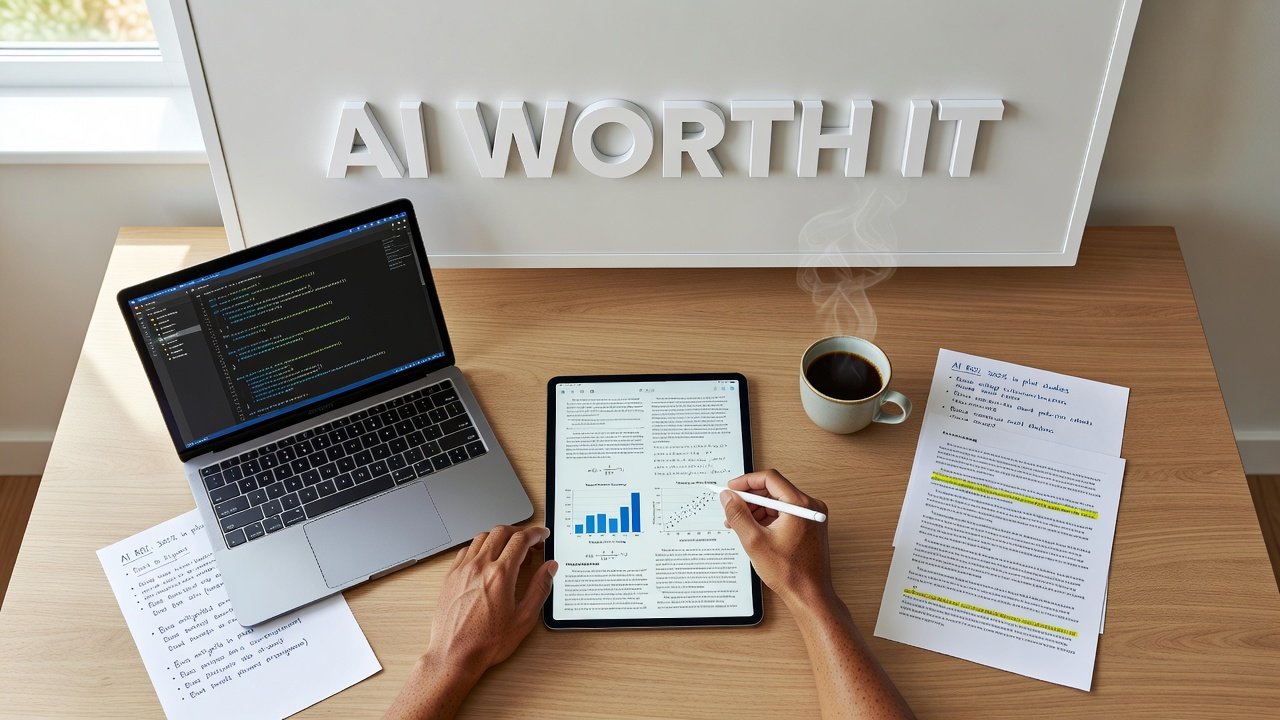
If you're someone who reads more than a couple of articles a week, you've probably hit that wall where a dense paper or technical report makes you want to close the tab and walk away. That's exactly where paid AI research assistants promise to step in. They claim to summarize, clarify, and even quiz you on what you've read. But here's the question worth asking: are these tools actually valuable for everyday reading, or are they just expensive shortcuts that don't stick? Let's look at what these assistants really do, who benefits most, and whether the monthly subscription makes sense for your reading habits.
What Paid AI Research Assistants Actually Do
At their core, paid AI research assistants are designed to make reading faster and comprehension deeper. They don't just skim content for you. The better ones pull from multiple sources, generate summaries with citations, clarify confusing sections, and even create follow-up questions to test whether you understood the material. Some are built for academic work, others for staying on top of industry news, and a few try to do both.
Take ChatGPT Deep Research, which starts at $20 per month. It reads through many sources and writes cited reports, which can be helpful if you're trying to understand a topic that spans multiple articles or papers. Perplexity AI, priced at $17 per month when billed annually, searches the live web and provides inline citations, making it easier to verify claims without hunting down original sources. Then there's Elicit, which specializes in academic literature reviews and costs $49 per user per month. It's designed for researchers who need to extract data points across dozens or hundreds of studies, but that price tag suggests it's overkill for someone just trying to understand a blog post or news article.

AI Snapshot: Gemini Deep Research is available for free on all Gemini plans, with higher usage limits starting at $4.99 per month, making it one of the most affordable entry points for AI-assisted research.
What separates these tools from free options is usually depth and accuracy. Free tiers exist for most platforms, including Gemini Deep Research, which offers basic features at no cost and upgrades to $4.99 per month for more usage. But paid versions typically offer better citations, longer reports, access to academic databases, and fewer usage caps. If you're reading casually, the free tier might be plenty. If you're reading for work or learning something complex, the paid features start to matter.
Who Benefits Most from These Tools
Not everyone needs a paid AI assistant to read better. If you're skimming headlines or reading for pleasure, these tools are probably unnecessary. But if you're a student, researcher, teacher, or professional who deals with technical material regularly, they can make a real difference.
Students working through dense textbooks or research papers can use tools like Consensus to get a quick read on whether evidence supports a claim, then verify by reading the underlying studies. Teachers benefit from platforms like Twinkl's AI Reading Comprehension Text Generator, which lets them create custom reading passages based on topic and grade level, often paired with comprehension questions. Professionals in fields like law, medicine, or finance who need to stay current on research without spending hours per day reading can rely on tools like Perplexity AI to pull quick, cited answers from the live web.
The common thread here is that these users are reading to learn or make decisions, not just to pass time. They need comprehension, not just consumption. That's when the assistance starts to pay for itself. If you're reading a 30-page policy document for work and an AI tool can summarize the key points in five minutes, then let you drill into specific sections, that's time saved and understanding gained. If you're reading a novel for fun, that same tool is solving a problem you don't have.
The Cost-Benefit Calculation
So, is it worth the monthly fee? That depends on how much you read and what kind of material you're working through. Let's break down the numbers. ChatGPT Plus costs $20 per month and includes Deep Research. If you read and need to synthesize five or more complex articles or papers per week, that's roughly 20 per month. At a dollar per synthesis, it's probably worth it. If you're reading one paper a month, you're paying $20 for something you could do manually.
Elicit at $49 per month makes sense for researchers conducting systematic literature reviews, where they're analyzing dozens or hundreds of papers. For a grad student or scientist, that's a bargain compared to the hours saved. For someone casually interested in a topic, it's absurd. Gemini Deep Research at $4.99 per month for higher usage limits is one of the most accessible options if you're testing whether this kind of tool fits your workflow.
One thing to consider is the hidden cost of not using these tools. If you're spending 10 hours a week reading material for work or school and struggling to retain it, that's 10 hours you're not getting full value from. A tool that cuts that time in half or doubles your comprehension isn't just saving time - it's amplifying your ability to use what you read. On the other hand, if you're already reading effectively and efficiently, paying for assistance is like buying a shortcut you don't need.
Another angle is the opportunity cost of free alternatives. ResearchRabbit is free and uses seed papers to generate citation trails, helping you uncover overlooked works. Semantic Scholar offers free, broad semantic search across a large multidisciplinary corpus of academic papers. If these free tools meet your needs, the paid versions are a luxury, not a necessity. But if you hit their limits regularly, the paid tiers start to look like tools rather than expenses.
What to Watch Out For
These tools aren't perfect, and it's important to know their limits before you commit. AI summaries can hallucinate, meaning they sometimes generate plausible-sounding information that isn't actually in the source material. This is especially risky with academic papers or technical documents where precision matters. Tools like Semantic Scholar warn that their AI-generated summaries carry a risk of hallucination, and that applies across the board.
Citations help, but they're not foolproof. Even when a tool provides inline citations, you still need to verify that the citation actually supports the claim being made. Perplexity AI and ChatGPT Deep Research both cite sources, but you should still click through and check. The tool is an assistant, not a replacement for critical thinking.
There's also the question of dependency. If you rely too heavily on summaries and never engage with the full text, you might lose the ability to parse complex material on your own. These tools are meant to amplify your reading, not replace it. Use them to get oriented, clarify confusing sections, and verify understanding, but don't skip the actual reading entirely.
Finally, consider the learning curve. Some of these tools require you to learn how to phrase questions effectively or how to structure your research queries. That's time upfront that might feel like it negates the efficiency gains. If a tool takes two hours to learn and saves you 10 minutes per week, you won't break even for several months. Most platforms are intuitive, but it's still a factor.
Conclusion
Paid AI research assistants can absolutely be worth it for everyday reading, but only if your reading habits justify the cost. If you're regularly working through complex, dense material for work, school, or serious learning, these tools can save time and boost comprehension in ways that free options can't always match. They act as genuine amplifiers, helping you extract more value from what you read and retain it longer. But if your reading is casual, occasional, or already manageable without help, the subscription is hard to justify. Start with a free tier or a low-cost option like Gemini Deep Research at $4.99 per month, see if it changes your workflow, and upgrade only if the benefits are clear. The right tool can make reading feel less like a chore and more like a conversation. The wrong one is just another expense that doesn't move the needle.
FAQs
Can AI research assistants really improve reading comprehension?
Yes, they can significantly enhance comprehension, especially for complex or technical material. They summarize key points, clarify difficult passages, and generate questions to test your understanding. However, they work best as a supplement to active reading, not a replacement. You still need to engage with the material directly to get the full benefit.
Are free AI research tools good enough for most people?
For casual or occasional reading, free tools like Gemini Deep Research, ResearchRabbit, and Semantic Scholar are often sufficient. They provide basic summaries, citation tracking, and search capabilities without a monthly fee. Paid tools offer deeper analysis, better citations, and higher usage limits, which matter more for professionals, students, or researchers who read frequently and need precision.
How do I know if a paid AI research assistant is worth the cost?
Evaluate how much time you spend reading complex material and whether you struggle with comprehension or retention. If you're reading five or more technical articles or papers per week for work or school, a tool like ChatGPT Deep Research at $20 per month or Perplexity AI at $17 per month could save hours and improve understanding. If you're reading less than that, stick with free options first.
What's the biggest risk of using AI research assistants?
The main risk is hallucination, where the AI generates plausible but inaccurate summaries or claims. Always verify citations and cross-check key facts with the original sources. Over-reliance on summaries can also weaken your ability to engage with complex material directly, so use these tools to assist, not replace, your reading process.
Author

Maya-Rodriges@foucheres.com
Related Posts
Free AI Tools That Turn Ideas Into Finished Graphics
Discover the best free AI graphic tools that transform rough concepts into polished visuals. Learn prompt tips, tool comparisons, and real workflow...
Read out all
Running AI Models on Your Own Machine: Practical Guide 2026
Learn how to run AI models on your own hardware in 2026. Complete guide to privacy, costs, hardware needs, and beginner-friendly tools...
Read out all
What AI Still Gets Wrong and How to Catch It
Learn what AI gets wrong most often and practical techniques to verify AI output. Understand hallucinations, confidence masks, and how to catch...
Read out all
AI Video Tools Worth Your Time in 2026
Discover AI video tools in 2026 that automate editing, personalize at scale, and turn prompts into polished videos in seconds. Real capabilities,...
Read out all
AI Coding Assistants: Which One Writes Code You Can Ship
Compare top AI coding assistants in 2026. Learn which tools write production-ready code, real productivity gains, and honest limitations developers face shipping...
Read out all
Run a 27B Parameter AI Model Locally With LM Studio
Learn how to run a 27B parameter AI model locally using LM Studio. Discover hardware requirements, setup steps, and privacy benefits of...
Read out all