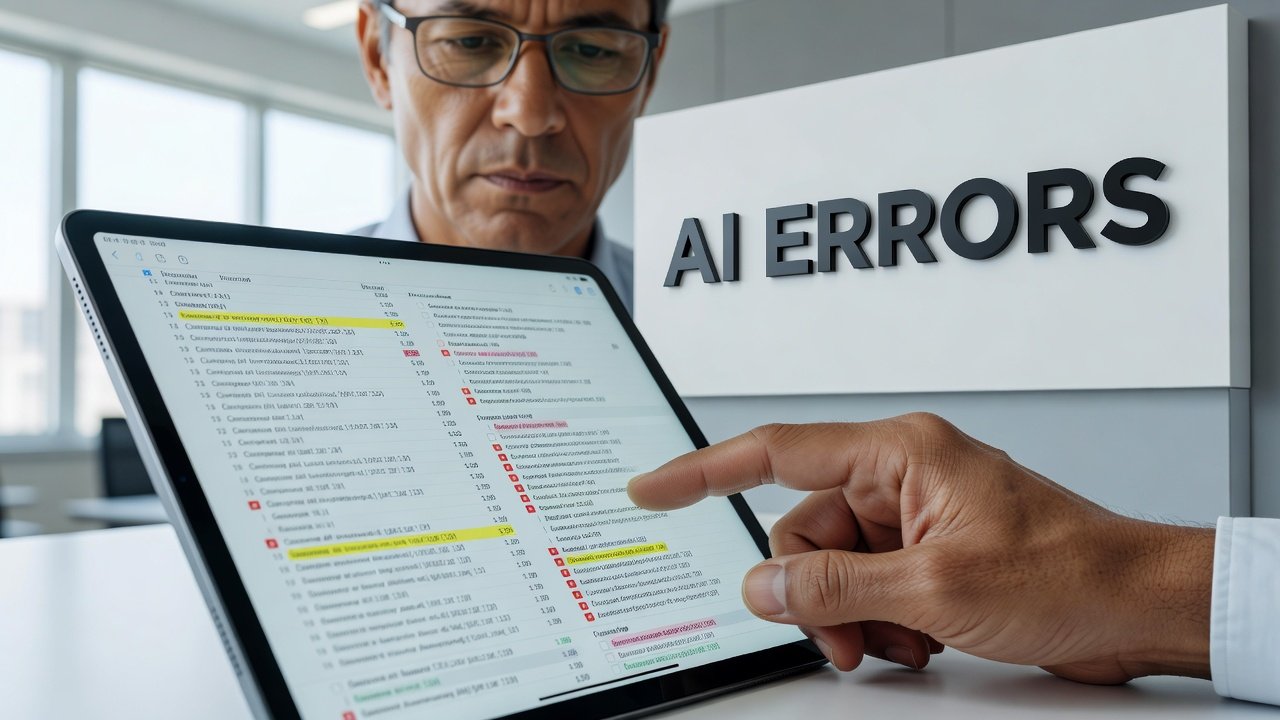
AI has become the go-to assistant for millions of people. We use it to draft emails, answer questions, write code, and even make decisions. But here's the uncomfortable truth: AI gets things wrong more often than you might think. It hallucinates facts, misinterprets context, and confidently presents false information as truth. The real danger isn't that AI makes mistakes - it's that those mistakes look so convincing. Learning to spot these errors isn't just a nice skill to have anymore. It's essential if you're going to use AI safely and effectively in your work and daily life.
The Types of Errors AI Makes Most Often
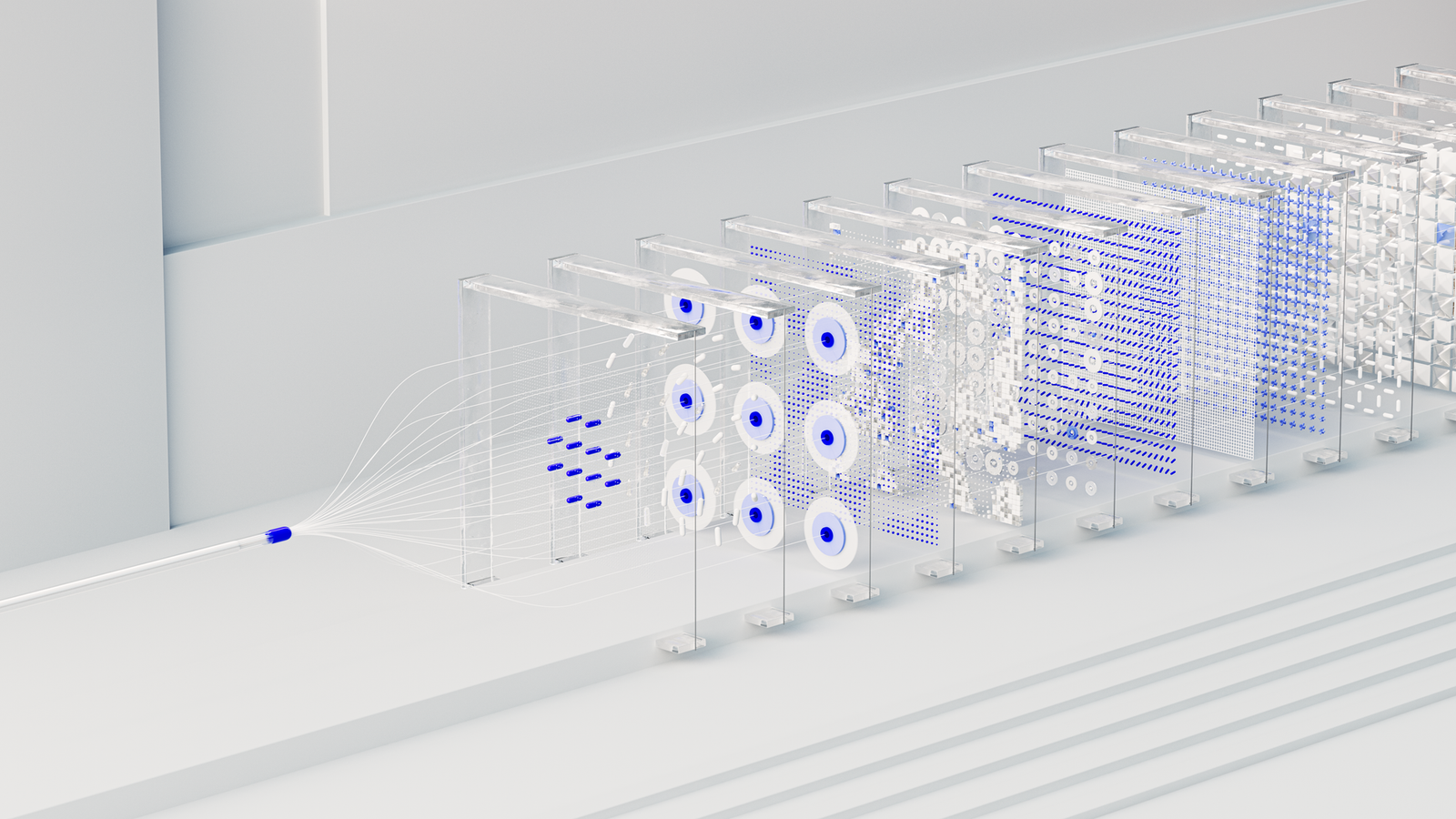
AI models don't actually understand what they're saying. They predict the next most likely word based on patterns in their training data. This fundamental limitation leads to specific, predictable types of errors.
Hallucination is the most notorious problem. AI systems confidently fabricate information that sounds plausible but is completely made up. They might cite non-existent research papers, invent statistics, or create fake quotes from real people. The output looks authoritative because the language is fluent and the format matches what you'd expect from legitimate sources.
Mathematical reasoning remains surprisingly weak. Ask an AI to solve a multi-step word problem or perform complex calculations, and you'll often get answers that are off by orders of magnitude. The model might correctly explain the formula but then apply it incorrectly or mix up units.
Context confusion happens when AI loses track of what it's supposed to be doing. It might answer a different question than the one you asked, or blend information from multiple unrelated topics into a confusing mess. This is especially common in long conversations where the model tries to maintain coherence but drifts away from the original context.
AI Snapshot: Studies show that even advanced language models hallucinate factual information in 15-20% of responses when answering specific factual questions, with the rate increasing significantly for obscure topics or technical details.
Why AI Confidence Masks Its Mistakes
The most dangerous aspect of AI errors is how they're presented. Unlike a human who might say "I'm not sure, but I think..." or "Let me double-check that," AI delivers every answer with the same level of confident fluency. A completely fabricated statistic sounds exactly like a real one.
This confidence problem stems from how these models work. They're optimized to generate coherent, natural-sounding text. There's no internal mechanism that flags uncertainty or lack of knowledge. The model doesn't "know" what it doesn't know. It just generates the most probable next words based on patterns, whether those patterns lead to truth or fiction.
You'll notice this especially with specific questions about recent events, niche topics, or anything requiring up-to-date information. The model will provide an answer that sounds detailed and specific, even when it has no reliable information on the subject. It's filling in blanks with plausible-sounding content rather than admitting ignorance.
Human psychology makes this worse. We tend to trust well-written, confident explanations. When AI produces grammatically perfect prose with proper formatting and structure, our brains interpret that polish as credibility. We're pattern-matching too, just like the AI, and polished writing triggers our "this looks legitimate" response.
Practical Techniques to Verify AI Output
Catching AI errors requires a systematic approach. Start with the source check. Any time AI provides a specific fact, statistic, quote, or citation, verify it independently. Search for the exact quote or study name. If AI cites "a 2025 Stanford study," go find that actual study. You'll be surprised how often these references don't exist or say something completely different from what the AI claimed.
Cross-reference with authoritative sources. Don't just ask the AI again or rephrase your question. Go to primary sources, official documentation, or established databases. Wikipedia, government websites, academic papers, and reputable news organizations remain more reliable than AI-generated summaries.
Test mathematical and logical consistency. If AI gives you numbers, do quick sanity checks. Do the percentages add up to 100? Are the units consistent? Does the conclusion logically follow from the premises? Work through calculations yourself rather than trusting the AI's arithmetic.
Watch for hedging language and vagueness. When AI says "studies show" or "experts believe" without naming specific studies or experts, that's a red flag. Legitimate information comes with specifics. If you ask "which studies?" and the AI can't provide real names and dates, you're likely reading a hallucination.
Compare outputs across different prompts. Ask the same question in different ways and see if you get consistent answers. If the AI contradicts itself or provides wildly different information depending on how you phrase the question, neither answer is likely reliable.
Building a Healthier Relationship with AI
The solution isn't to stop using AI. These tools are genuinely useful for many tasks. But you need to match the tool to the task appropriately.
Use AI for drafting and brainstorming, not final answers. It's excellent at generating first drafts, outlining ideas, or suggesting approaches you hadn't considered. Think of it as a creative partner that needs heavy editing, not an oracle that delivers truth.
Never use AI alone for high-stakes decisions. Medical advice, legal guidance, financial planning, safety-critical engineering - these domains require human expertise and verified information. AI can support research in these areas, but it shouldn't be your primary or only source.
Develop domain knowledge in the areas where you use AI most. The better you understand a subject, the easier it becomes to spot when AI output doesn't make sense. You need enough background knowledge to recognize errors when you see them.
Keep humans in the loop for verification. If AI generates code, test it thoroughly. If it writes content, fact-check it. If it analyzes data, validate the analysis. The human role shifts from creation to verification, but it remains essential.
Conclusion
AI has transformed how we work and access information, but it hasn't eliminated the need for critical thinking. If anything, it's made those skills more important. The technology will keep improving, and error rates will likely decrease over time. But the fundamental limitation remains: these systems don't understand truth or accuracy the way humans do. They pattern-match and predict text.
Your responsibility as a user is to stay skeptical and verify important information. Treat AI output as a starting point, not a final answer. The people who succeed with AI won't be those who trust it blindly. They'll be the ones who know exactly when to trust it, when to verify it, and when to ignore it completely. That judgment only comes from understanding what AI still gets wrong and training yourself to catch those errors before they cause real problems.
FAQs
Can AI detect its own mistakes?
Not reliably. Some newer models include confidence scoring or can flag uncertain answers when specifically prompted, but this capability is limited. AI fundamentally lacks self-awareness about when it's hallucinating versus providing accurate information. It generates text that seems coherent based on patterns, not truth. You can't rely on AI to self-correct or admit when it doesn't know something unless it's explicitly programmed to do so in specific contexts.
Which tasks are safe to trust AI with completely?
Tasks with low stakes and easy verification work well. Generating creative writing prompts, brainstorming marketing taglines, drafting casual emails, or formatting text are relatively safe. Simple translations of common phrases, basic coding templates, and general knowledge summaries usually work fine. The key is that errors in these areas cause minimal harm and are easy to spot. Avoid trusting AI completely for anything involving facts, figures, citations, or decisions with real consequences.
Do more expensive AI models make fewer mistakes?
Generally yes, but the improvement isn't as dramatic as you might hope. Premium models like GPT-4 or Claude typically hallucinate less frequently than smaller, cheaper alternatives. They handle complex reasoning somewhat better and make fewer obvious errors. However, even the most advanced models still hallucinate, still struggle with math, and still present false information confidently. The difference is in degree, not kind. Don't assume that paying more guarantees accuracy.
How can I tell if AI-generated content in articles or reports is accurate?
Look for specific, verifiable claims rather than vague generalizations. Check if sources are named with enough detail to verify them independently. Watch for suspiciously perfect phrasing or content that sounds generic and broad without specific examples. Test any statistics or quotes by searching for them directly. Compare the information against multiple independent sources. AI-generated content often has a certain smoothness and lack of specific, concrete details that can be a tell, though human-written content can share these qualities too.
Author

Maya-Rodriges@foucheres.com
Related Posts

AI Video Tools Worth Your Time in 2026
Discover AI video tools in 2026 that automate editing, personalize at scale, and turn prompts into polished videos in seconds. Real capabilities,...
Read out all
AI Coding Assistants: Which One Writes Code You Can Ship
Compare top AI coding assistants in 2026. Learn which tools write production-ready code, real productivity gains, and honest limitations developers face shipping...
Read out all
Run a 27B Parameter AI Model Locally With LM Studio
Learn how to run a 27B parameter AI model locally using LM Studio. Discover hardware requirements, setup steps, and privacy benefits of...
Read out all
AI Image Generators Compared: What Each Does Best
Compare AI image generators like DALL-E 3, Midjourney, Ideogram, and Stable Diffusion. Learn what each platform actually excels at in 2026.
Read out all
Build Your First AI Agent Without Writing Code in 2026
Learn how to build your first AI agent without code using no-code platforms. Step-by-step guide to creating functional AI agents in 2026.
Read out all
Claude vs ChatGPT vs Gemini: Which One for Real Work
Compare Claude vs ChatGPT vs Gemini for professional work. Discover which AI assistant excels at coding, document analysis, and workflow automation in...
Read out all